

Translate Video to English and Keep Subtitles in Sync
To translate video to English without disrupting its timing, keep the original audio and add translated subtitles unless you have a clear reason to dub the voices…
Good to know before dubbing your video
Verified July 29, 2026Figures: official YouTube blog (2025-2026) · CSA Research 2020 · Klipa 30-day measurements.
Translating a video means replacing its spoken language with another — in writing (subtitles) or out loud (dubbing). Klipa's AI video translator transcribes the speech in your video, translates it, then generates a synthetic voice timed to the picture — no studio, no voice actor, and no cloning of your own voice.
Each translated line is placed at its original timestamp, so the voice stays locked to the right moment in the picture instead of drifting further out of place as the video goes on. If a translation runs past its slot, the pace is nudged up within a measured limit instead of the voice being cut off. The last line is never trimmed: if it needs the extra time, the video is extended by a few frozen frames so it can finish.
The dubbing voice is one of seven named AI voices (three female, three male, one neutral), each usable across all 19 supported languages — never a clone of your own voice, and never a recorded actor's. That distinction matters: voice cloning raises consent questions that a catalogue of synthetic voices, upfront about what it is, avoids. You hear a sample before running the full translation.
A subtitle file in the target language comes out alongside the dubbed video, sharing the same timestamps as the dub. Publish the dub on its own, the subtitles on their own, or both together — useful when a platform handles imported subtitles poorly, or when your audience watches with the sound off.
The translated voice is timed to the video's pacing and cuts, not to the shape of the speaker's mouth. Unlike tools that advertise lip-sync — reworking the picture so the mouth matches the new language — Klipa never touches the picture or the face: only the audio track changes.
The video to translate can be uploaded in common formats — MP4, MOV, AVI, MKV, WebM. An option keeps the original audio playing in the background, at low volume, under the new voice: useful when ambient sound or music from the original track should still be audible under the dub.

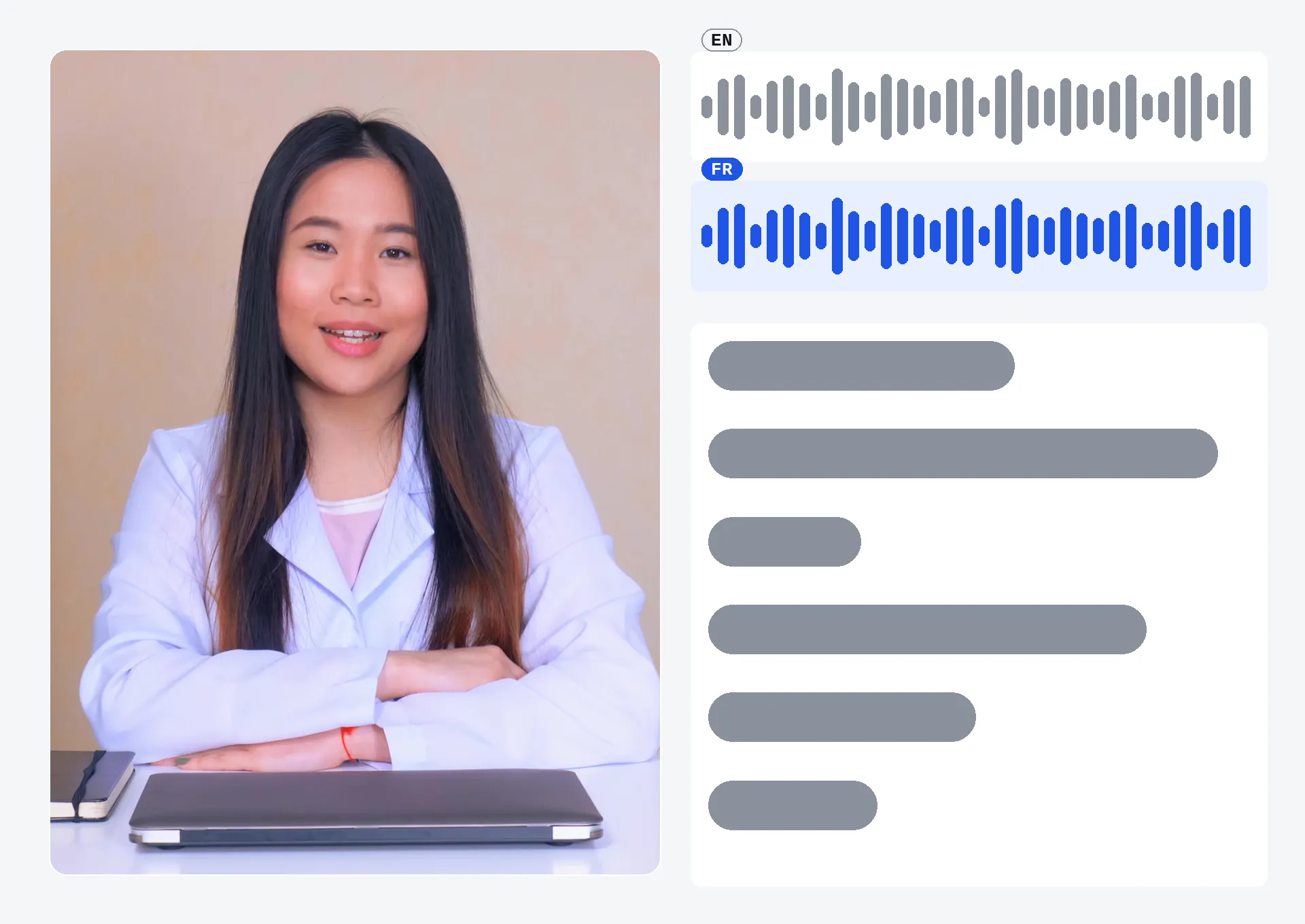
Drop your video file (MP4, MOV, AVI, MKV or WebM): the spoken language is detected automatically by the AI, with nothing to specify yourself before moving on.
Select the target language from the 19 available and a dubbing voice from the ones on offer, then listen to a few seconds of it before running the full translation.
Get the video back with its new voice synced to the picture, plus the translated subtitle file — ready to publish with the dub, the subtitles, or both.
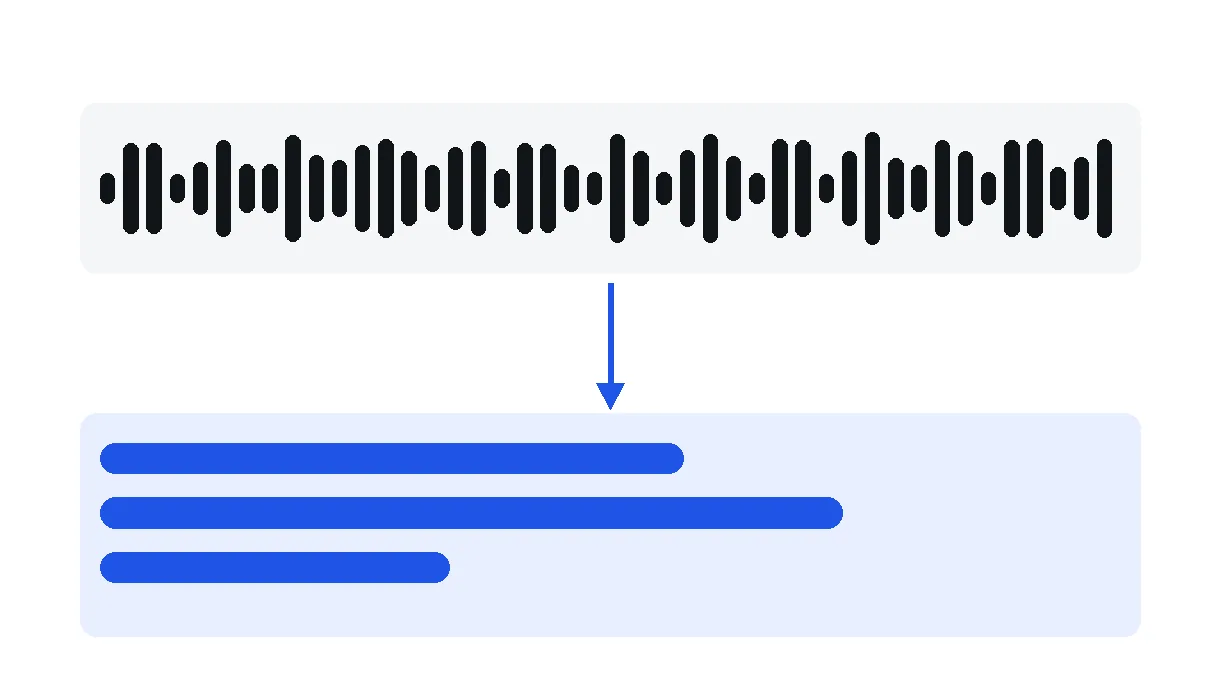
Transcription, translation and voice generation run automatically from start to finish: upload a video in one language, get back a dubbed one in another, with no subtitle file to export by hand and no juggling between separate tools.
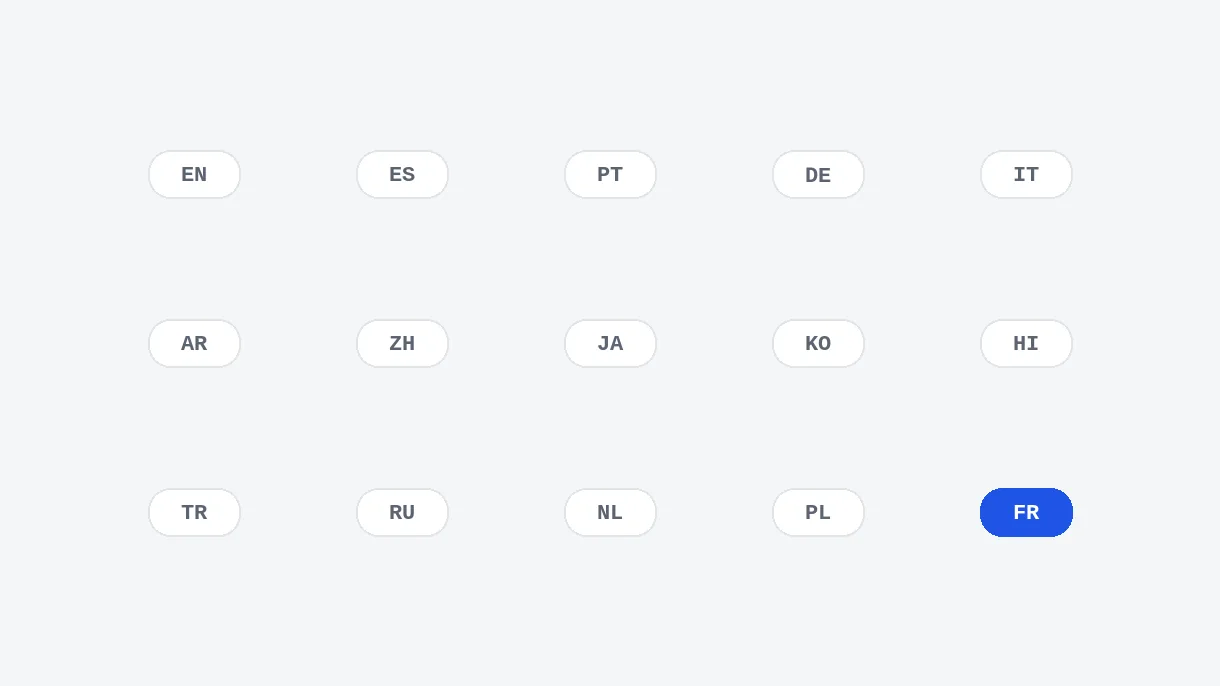
English, French, Spanish, Portuguese, German, Italian, Arabic, Chinese, Japanese, Korean, Hindi, Turkish, Russian, Dutch, Polish, Filipino, Urdu, Malay and Persian — each one dubbed by Klipa's 7 voices, with a sample to hear before you commit to the full translation.
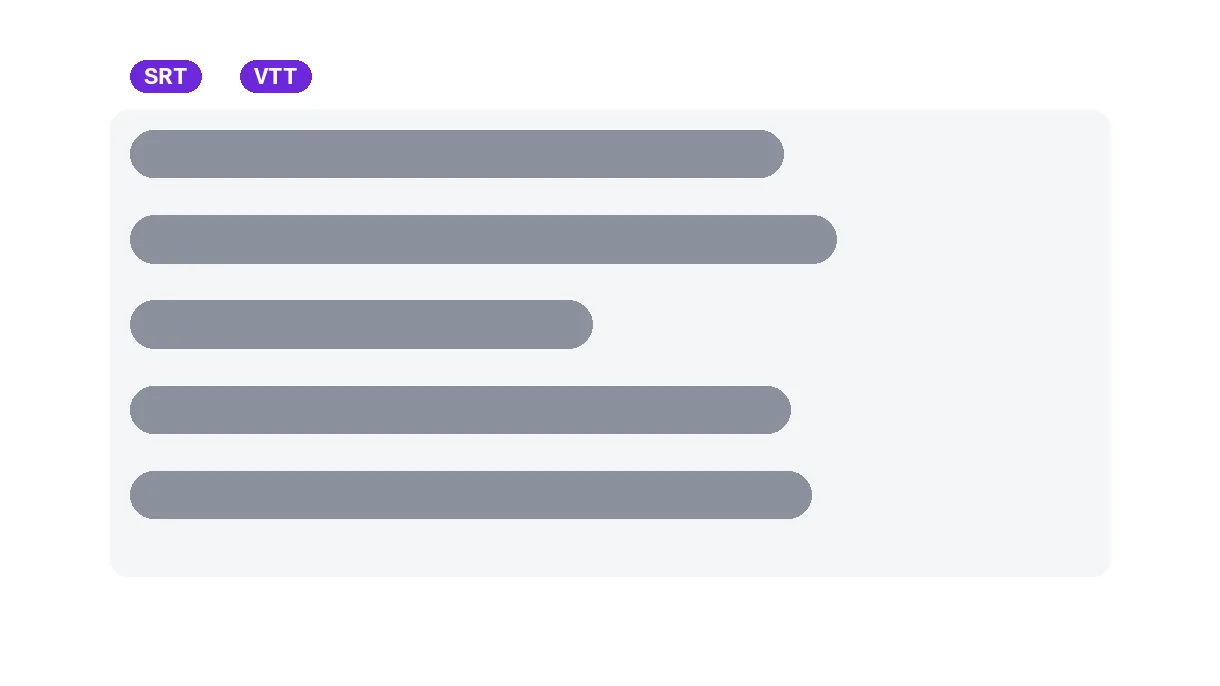
A subtitle file in the target language is produced at the same time as the dub, sharing the same timestamps. Download it on its own, alongside the new voice, or in place of it, depending on where the video is published.
Seven named voices — three female, three male, one neutral — usable in all 19 languages, each with a different tone: measured, warm, energetic. Listen to a sample before running the full translation, to pick the one that fits your video.
A video recorded in another language becomes watchable for an English-speaking audience, with a dubbed voice instead of subtitles that many viewers skip past on mobile. The original video stays untouched on your side, ready to publish alongside the dubbed one.
One source video becomes several dubbed versions, one per target market, with no reshoot and no trip back to a studio for each language. The message and pacing of the original stay the same — only the voice changes.
Learners who don't speak the original language follow the material in their own, with the voice timed to whatever is being demonstrated on screen rather than subtitles that force them to read while a diagram or gesture plays.
A video already online gets a second life in a market it never reached, without re-recording the content or hiring a dubbing actor for every language. Each market gets its own voice, in its own language, from the same source file.
A family message, a filmed memory or a wedding video recorded in one language becomes audible to relatives who speak another, without going through a professional translation service for what is usually a one-off, personal use.
Upload the video, pick the target language, and the AI translates the voice while keeping the dialogue's pacing. 20 credits are offered to try the tool. A Pass or a Pro plan delivers it without the logo.
Each translated line is placed at its original timestamp. If it runs past its slot, the pace speeds up slightly within a measured limit rather than the voice being cut off; the last line is never trimmed, even if the video has to be extended by a few frozen frames to fit it in.
19 languages are available for dubbing: English, French, Spanish, Portuguese, German, Italian, Arabic, Chinese, Japanese, Korean, Hindi, Turkish, Russian, Dutch, Polish, Filipino, Urdu, Malay and Persian. Every language is dubbed with the same 7 Klipa voices, playable as a short sample before you commit to the full translation.
No. It's a synthetic voice picked from seven named voices (female, male and one neutral), each usable in any of the 19 supported languages — never a clone of your voice, and never a recorded actor's either. You hear a sample before the full translation runs.
Yes. Seven voices are available, split between female and male, each with a different tone, and the same voice speaks all 19 supported languages. You can play a short sample before starting the full translation, to pick the one that fits your video best.
Yes. A translated subtitle file is generated alongside the dubbed video, sharing the same timestamps as the dub. You can publish the video with the dub alone, the subtitles alone, or both together, depending on the platform and the audience.
No, and that's deliberate: the translated voice is timed to the video's pacing and cuts, not to the shape of the speaker's mouth. Unlike tools that advertise lip-sync, Klipa never alters the picture or the face — only the audio track changes, whatever the target language.
Processing time depends on the video's length and how many lines of speech need transcribing, translating and voicing: expect a few minutes for a short video, noticeably longer for a lengthy or dialogue-heavy one, since every line is handled in turn.
The video translator works on an uploaded file, not a pasted YouTube link. Download the video first with Klipa's video downloader tool, then upload the resulting file here to run the translation and dubbing, with no extra step in between.

To translate video to English without disrupting its timing, keep the original audio and add translated subtitles unless you have a clear reason to dub the voices…

Imagine opening a clip recorded in Portuguese, watching it with clean English subtitles, and uploading the same video to TikTok without a single ‘file too large’…

Your video speaks volumes in one language, but there are millions of potential viewers who don’t speak it. Adding multilingual video subtitles is the fastest way to…
Translation, synced AI dubbing and translated subtitles.
No credit card required
